Private lending platform case studyOne lending platform built to replace two disconnected tools — from application to payoff.
Titan Funding ran origination and servicing in separate off-the-shelf tools, re-keying data and reconciling investor money by hand. I built one custom platform whose books reconcile to the penny.
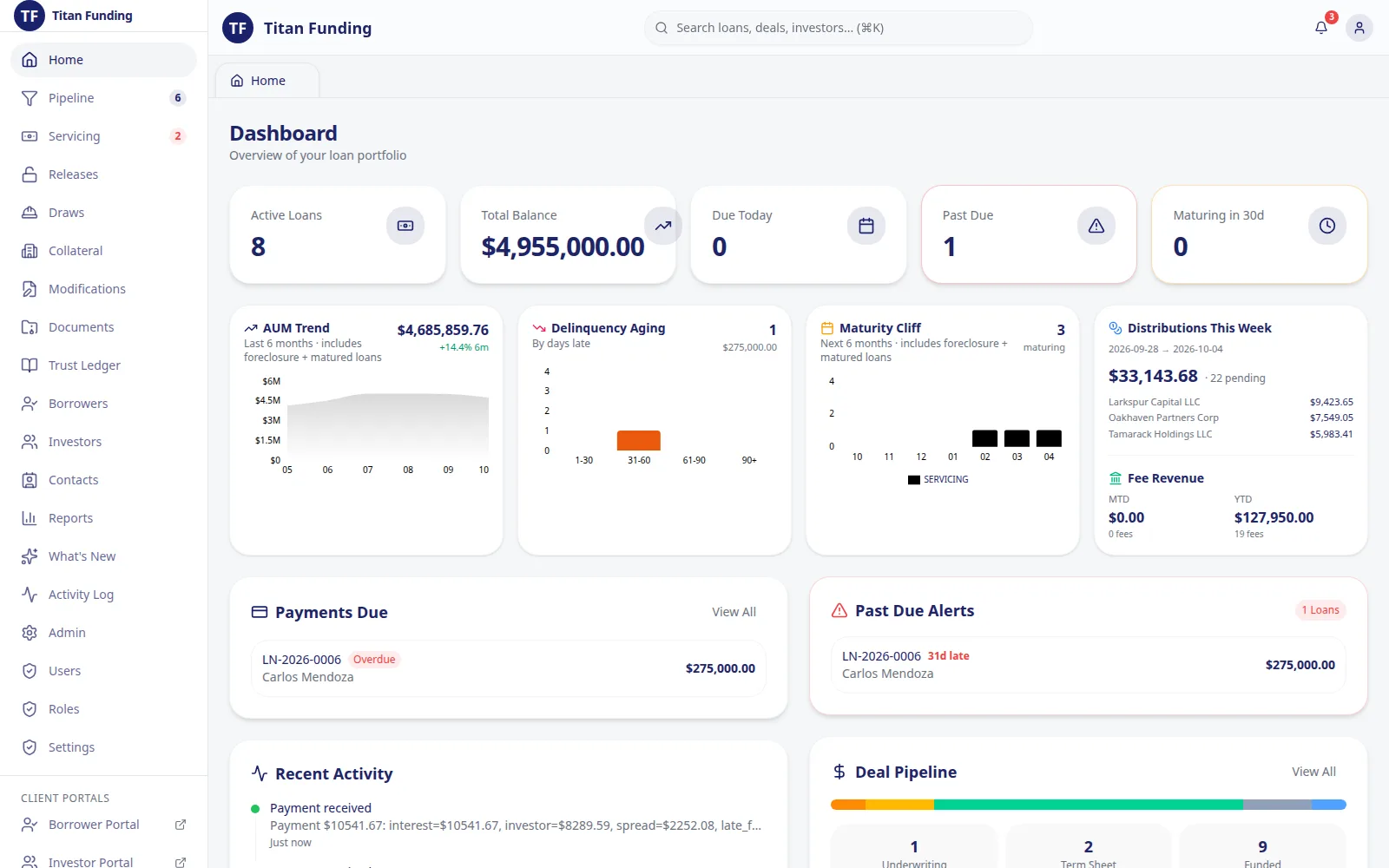
The real product, shown with demo data.
A private lender needed one system to run a loan from application to payoff, where each loan is funded by several investors at different rates. I built origination and servicing on one platform, with a payment waterfall, exact-decimal money, an append-only ledger and maker/checker controls — so every party's balance reconciles to the penny.
Two off-the-shelf tools, and a lot of re-keying in between.
A private real-estate lender was running its business across two disconnected off-the-shelf tools — one for originating loans, one for servicing them. Staff re-keyed data at the hand-off and reconciled investor money by hand. They needed one custom platform to run a loan from application all the way through to final payoff.
The hard part wasn't the screens. It was the money.
Each loan is funded by multiple investors, each potentially at a different interest rate. The system had to track who funded which slice, at what rate, and exactly what each party was owed every single period — with the books reconciling to the penny. Generic loan software couldn't model that.
Both halves of a lending business on one platform.
An end-to-end platform covering both halves of the business: a guided application and a drag-and-drop deal pipeline on the origination side, and full loan servicing on the other.
From first enquiry to funded loan
From first payment to final payoff
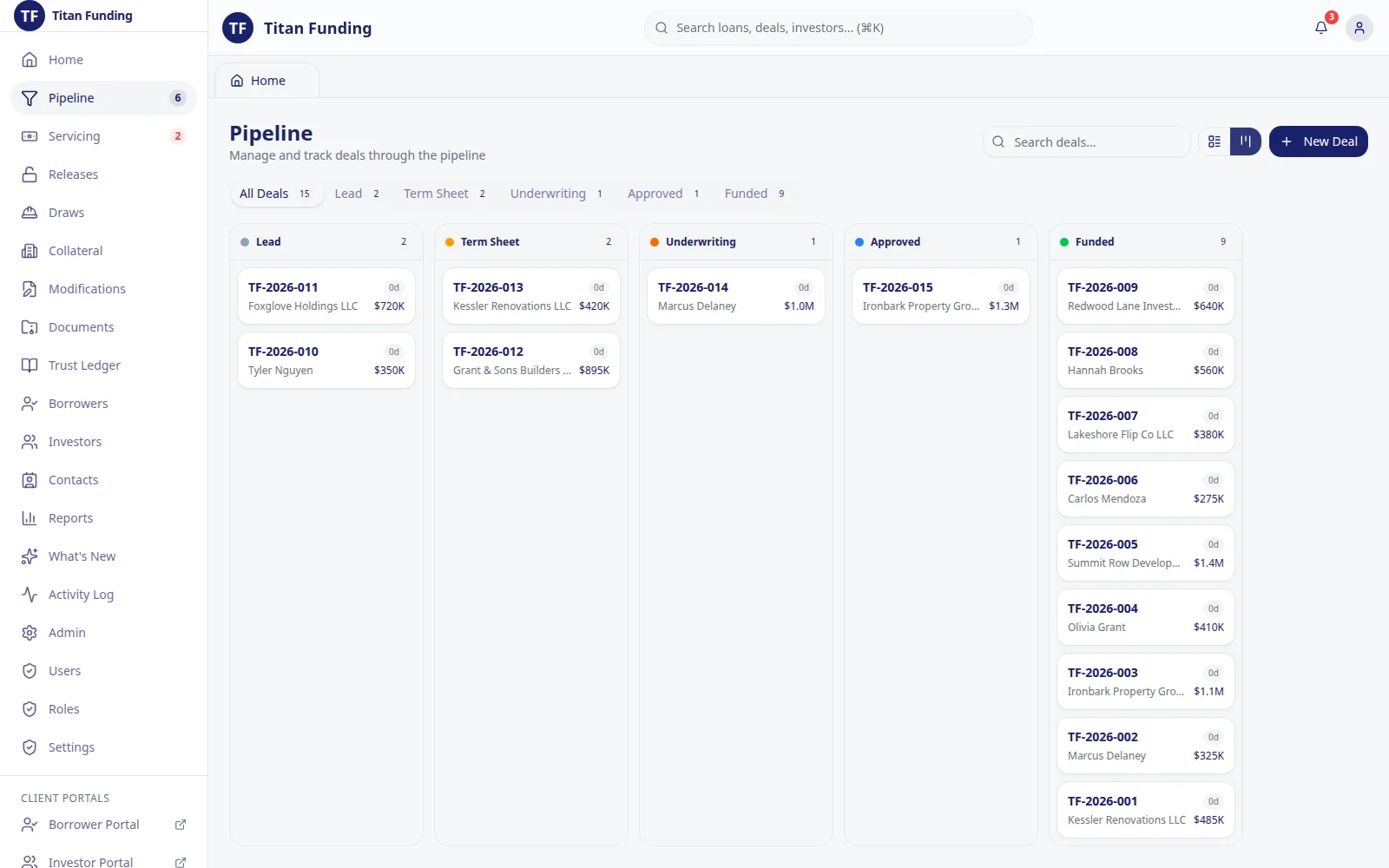
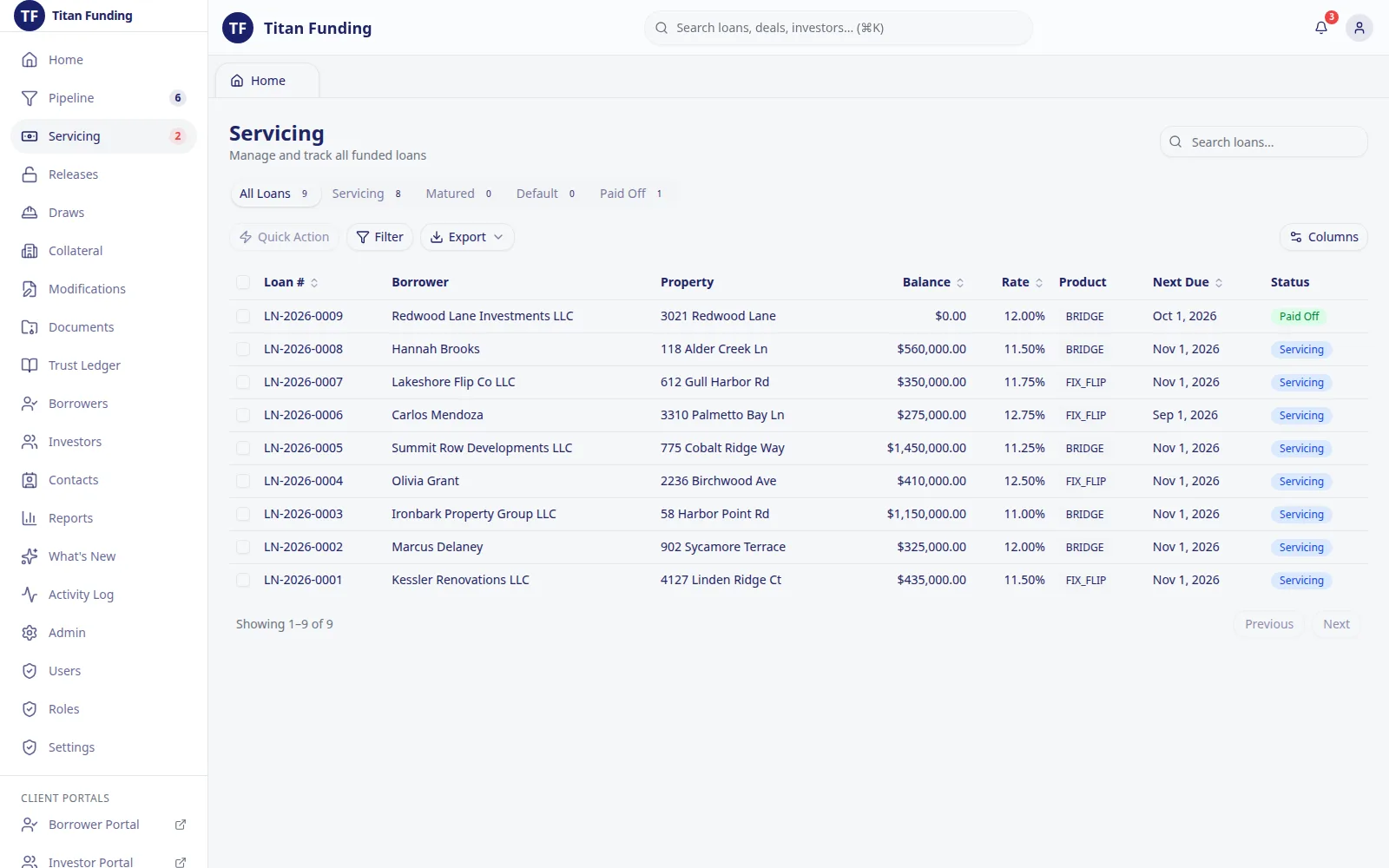
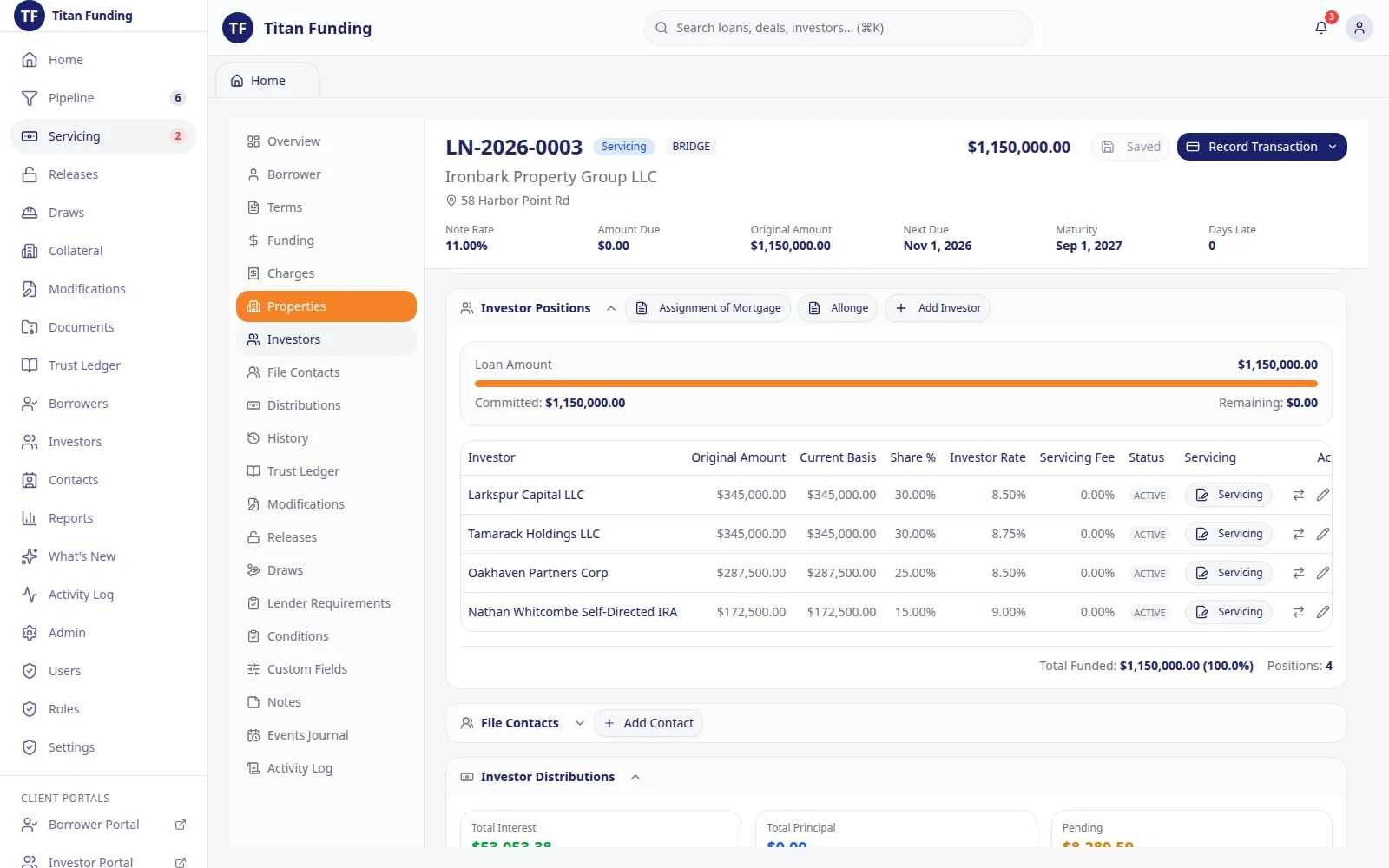
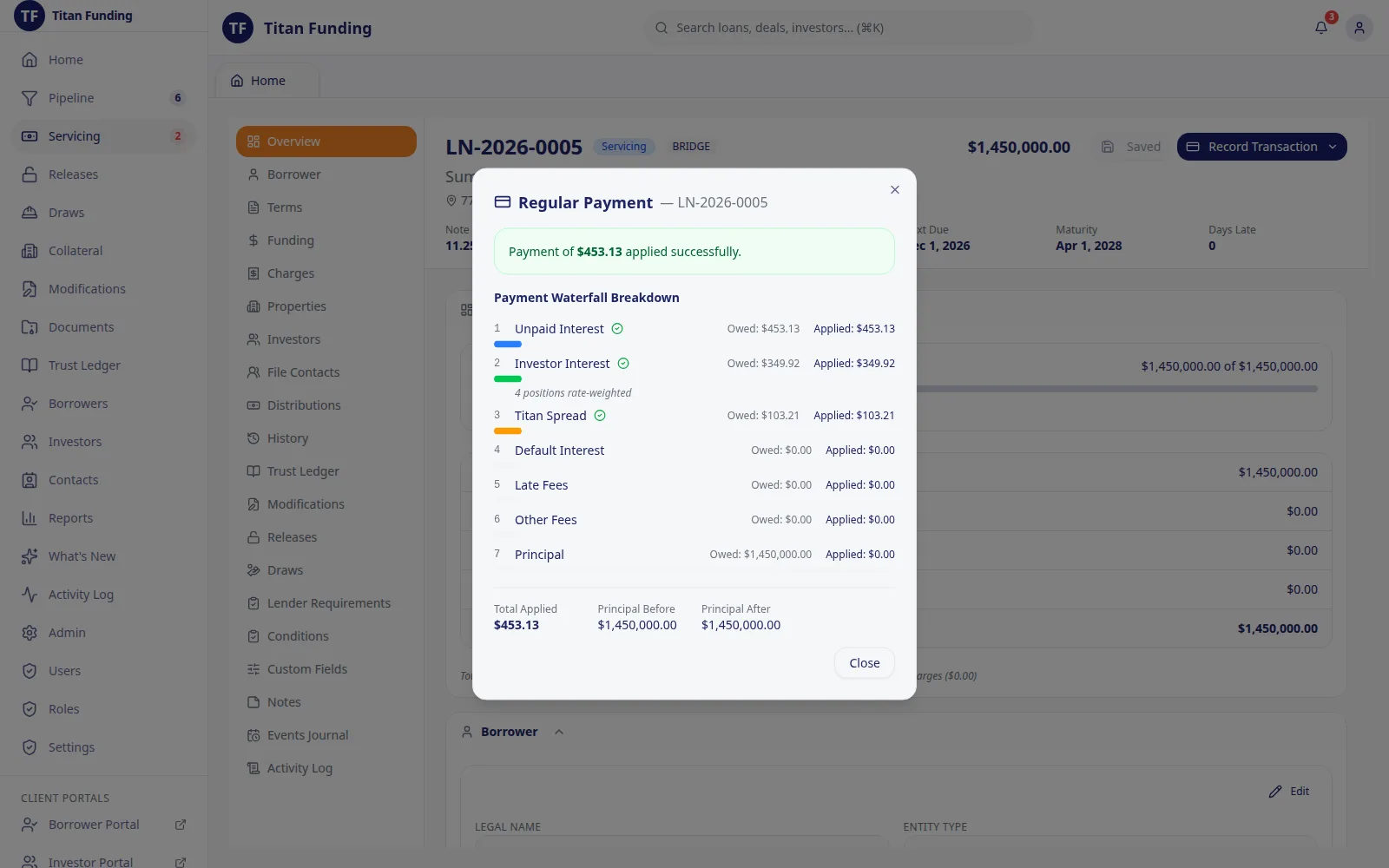
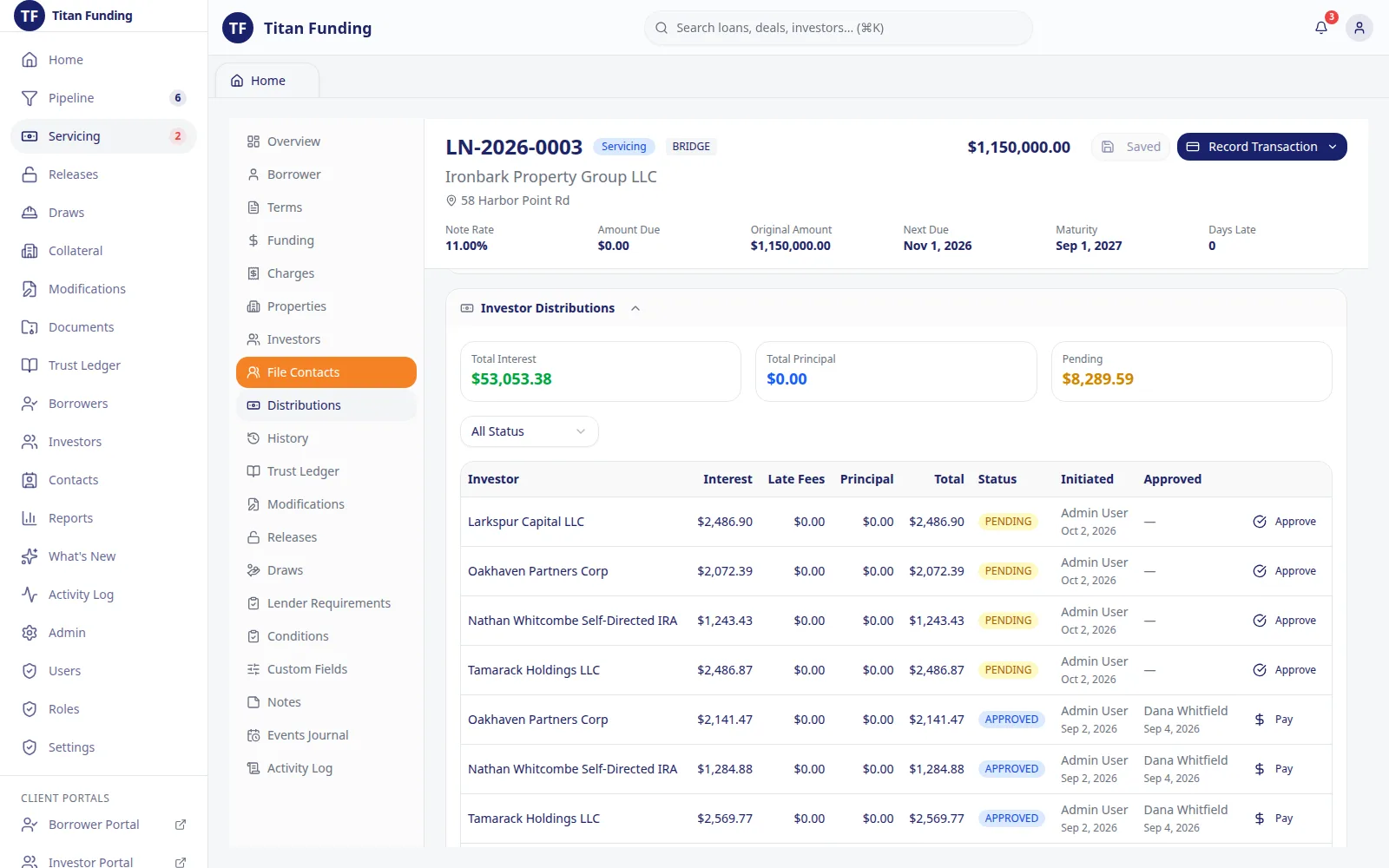
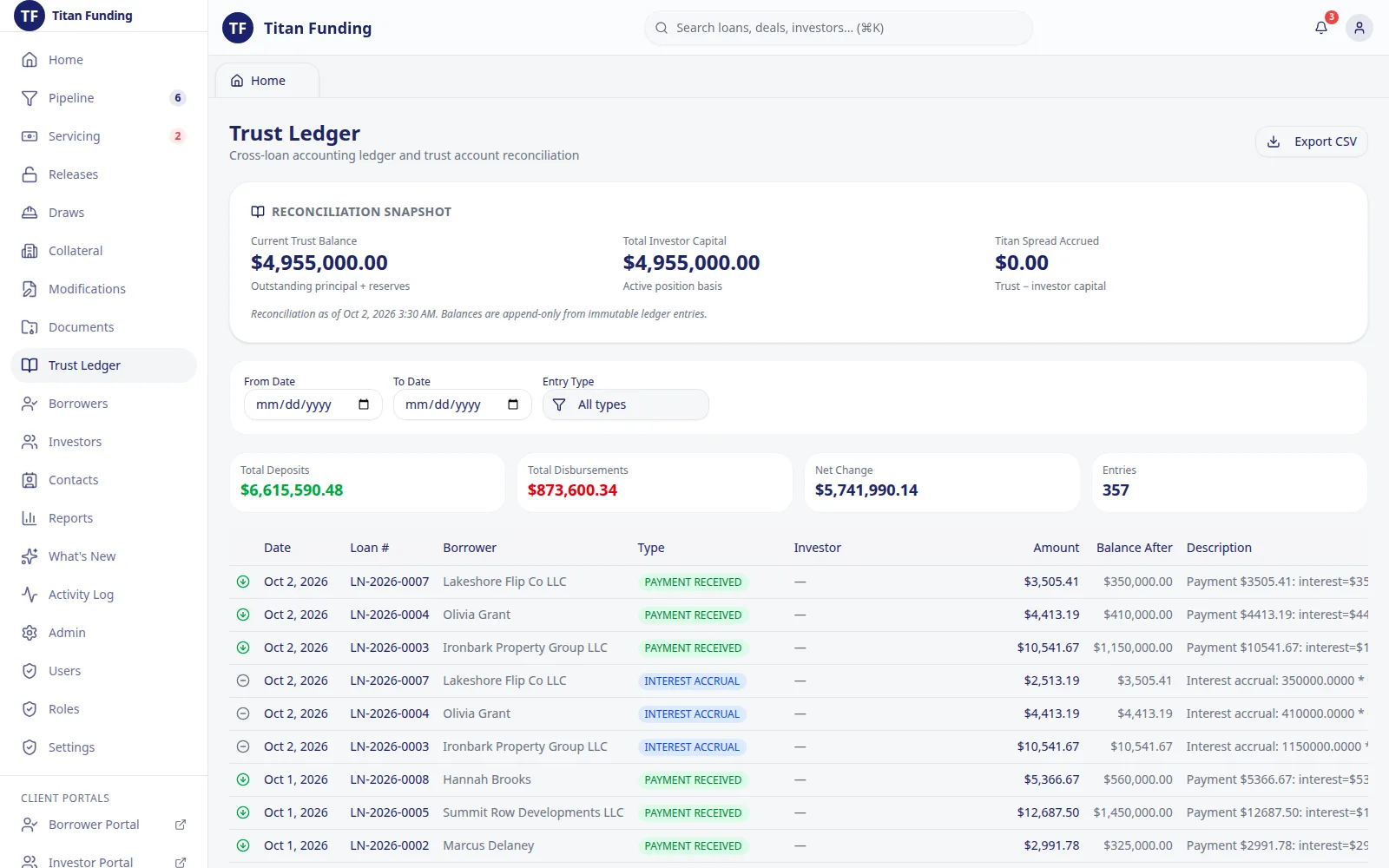
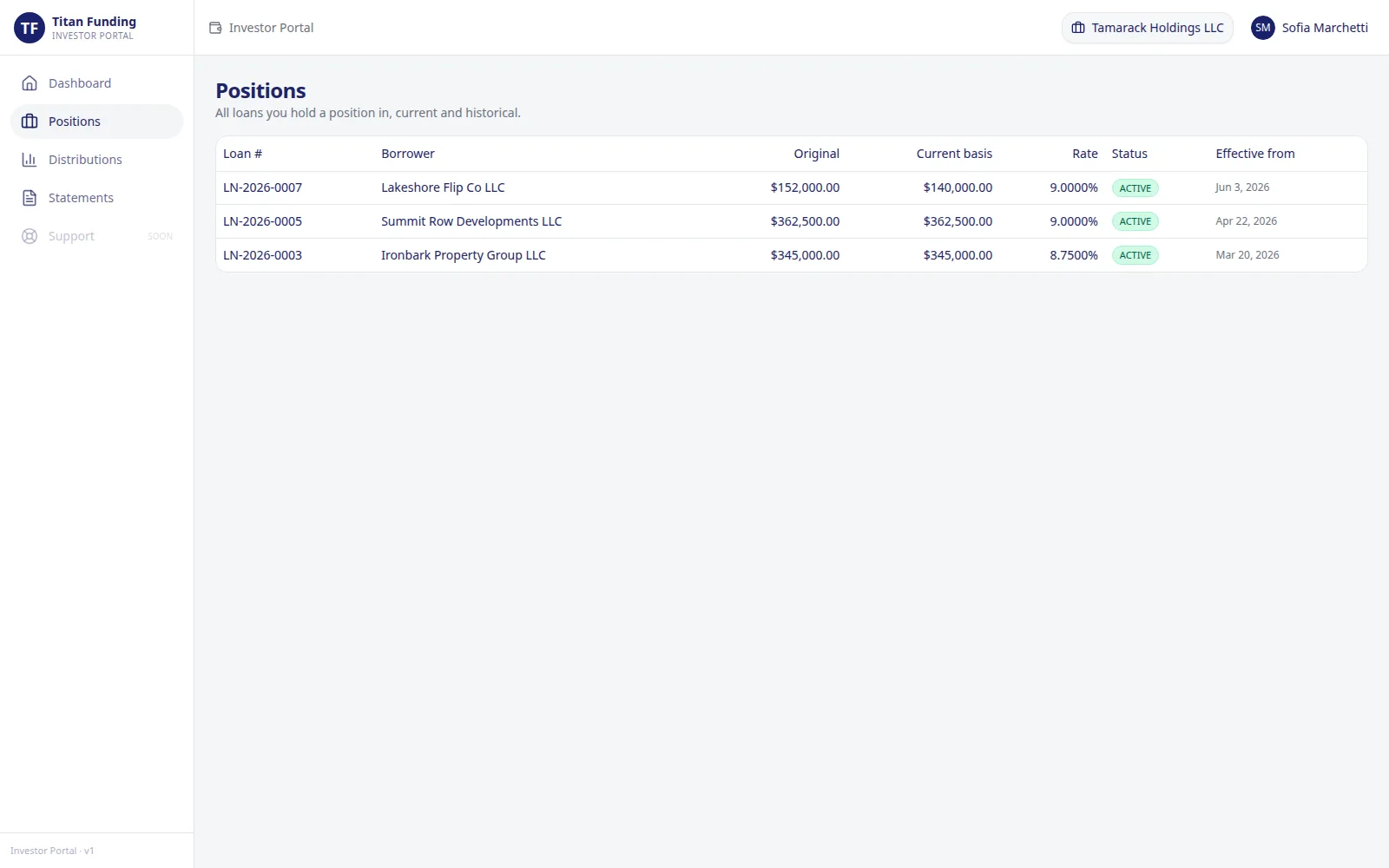
Screens from the real product, captured with demo data. No client or customer data is shown.
One loan, one system — from first application to final payoff
- 01Guided applicationBorrower applies once
- 02Deal pipelineDrag-and-drop stages
- 03Servicing engineDaily accrual · fees · defaults
- 04Payment waterfallFixed split order
- 05Append-only ledgerReversals, never edits
Built so the books can't drift — even by a cent.
Payment waterfall
Every incoming payment is split in a defined order, with investors made whole before the lender earns its margin.
Exact decimals, explicit rounding
All money stored as exact decimals — never floating point — with explicit rounding rules and reconciliation checks on every balance.
Append-only ledger
Nothing is ever edited or deleted. Corrections post as reversing entries, leaving a permanent audit trail.
Idempotent posting + maker/checker
A payment can never be applied twice, and sensitive actions need a second person's approval.
Pro-rata, penny-safe distributions
Investor payouts use deterministic penny-rounding, so the books always balance.
The calls that shaped the build
Floating-point numbers drift by fractions of a cent. Across many investors and periods that drift becomes books that don’t reconcile — so every amount is an exact decimal with explicit rounding rules.
In money systems, an edit destroys the history an auditor or investor needs. Corrections post as reversing entries instead, leaving a permanent trail.
Sensitive actions — like posting or reversing money — need a second person to approve them, so one mistake or bad actor can’t move funds alone.